Careers · Entry-Level With a BSW
How to Become a Case Manager
Can You Become a Case Manager With a Social Work Degree?
Yes. A case manager with a social work degree can start right after graduation, because a BSW teaches exactly what the job asks: assessing needs, building a service plan, connecting people to programs and documenting progress. Many case manager jobs accept a high school diploma or a related bachelor's, so the BSW is not always required, but it adds a supervised practicum, a bachelor's license in 42 of 52 jurisdictions and a one-year route to the MSW. Compare all 605 accredited options on the BSW programs page.
What a Social Work Case Manager Does
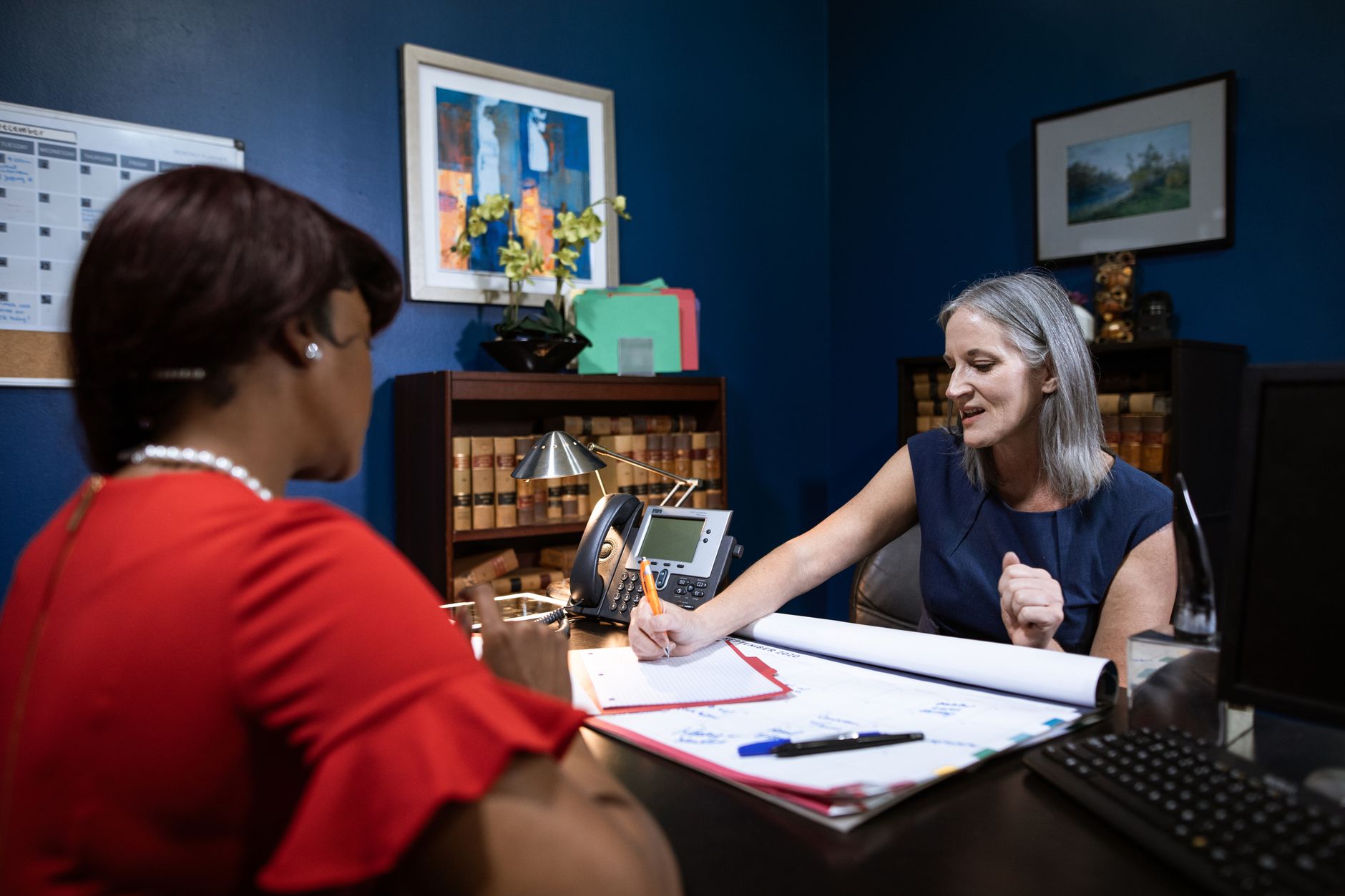
A case manager is the person who keeps a client’s services organized. You meet someone who needs help, figure out what they need, line up the programs that can provide it and then check that the help actually arrives. The client might be a parent who just lost housing, an older adult leaving a hospital, a veteran, or someone in recovery.
BLS lists the core duties of the social and human service assistants who do much of this work:
- Help determine what type of aid clients need.
- Work with clients and professionals, such as social workers, to develop a treatment plan.
- Research services, such as food assistance programs and Medicaid.
- Coordinate the services clients receive.
- Help clients complete paperwork to apply for assistance programs.
- Check in with clients to make sure services are provided appropriately.
BLS names related job titles too: case work aide, family service assistant, social work assistant and human service worker. Employers mix and match these titles, so a “case manager” posting at one agency may match a “family service worker” posting at another.
Becoming a Case Manager With a Social Work Degree
Here is the honest version: many case manager jobs don’t require a BSW. BLS says a high school diploma is typical for entry-level social and human service assistant work, with on-the-job training. Some employers prefer or require an associate’s or bachelor’s in human services, social science, psychology or public policy.
So why spend four years on a BSW? Because it moves you from the minimum to the front of the line, and keeps doors open that a diploma closes:
- Supervised experience. Every CSWE-accredited BSW includes at least 400 hours of field education. The median among the 155 programs that publish their hours is 430. You graduate with a reference from an agency supervisor.
- The skills case management runs on. CSWE’s competencies for every BSW include engaging, assessing, intervening and evaluating with individuals, families, groups, organizations and communities, the same cycle a case manager repeats with every client.
- A license. 42 of 52 jurisdictions issue a bachelor’s-level social work license. A diploma or psychology degree doesn’t qualify you for it.
- A social worker title. BLS says a BSW is “the most common requirement for entry-level nonclinical social worker positions.” With it you can apply for case manager and social worker roles.
- A shorter MSW. Accredited MSW programs offer advanced standing to BSW graduates, often finishing in one year.
Caseworker vs Social Worker: What’s the Difference?
People use the words loosely, but the jobs differ in training and scope.
| Case manager or caseworker | Social worker (BSW level) | |
|---|---|---|
| Typical entry education (BLS) | High school diploma; some employers prefer a related associate’s or bachelor’s | Bachelor’s degree in social work |
| Core work | Coordinating services, paperwork, follow-up | Assessment, planning and advocacy, plus coordination |
| Supervised field training | On the job | At least 400 hours during the degree |
| Bachelor’s social work license | Not eligible without a BSW | Eligible in 42 of 52 jurisdictions |
| Route to clinical practice | Needs a full MSW | MSW with advanced standing |
In practice, a BSW graduate hired as a case manager is often doing social work under a different title. The degree is what lets you change titles later without going back to school.
Do Case Managers Need a License?
Most entry-level case manager jobs are unlicensed. The license becomes relevant when an employer wants a social worker for the role, or when the job title itself is “social worker.” BLS notes that “some states also require nonclinical social workers to have a license or credential.”
If you hold a CSWE-accredited BSW, 42 of 52 jurisdictions offer a bachelor’s-level license, under titles that include LBSW, LSW, LSWA and RSW. 31 of them use the ASWB Bachelors exam: 122 questions, a 4-hour limit and a US$230 fee, after your state board approves you. Ten jurisdictions issue no bachelor’s license: California, Colorado, Connecticut, Florida, Georgia, Illinois, New York, Rhode Island, Vermont and Washington. Look up your own state in the BSW license checker or read the LBSW license guide.
Case Manager Pay
BLS groups this work under social and human service assistants: a national median of $45,930 across 437,860 jobs, with the middle half earning $38,150 to $54,350 and the top tenth $63,290 or more.
| Highest-paying states (500+ jobs) | Median | Jobs |
|---|---|---|
| District of Columbia | $59,460 | 2,080 |
| Washington | $54,770 | 7,590 |
| Oregon | $51,230 | 11,260 |
| California | $51,090 | 58,730 |
| Minnesota | $49,940 | 11,110 |
| New Jersey | $48,420 | 17,270 |
| Rhode Island | $47,720 | 2,290 |
| Maine | $47,710 | 4,580 |
BLS Occupational Employment and Wage Statistics, May 2025, SOC 21-1093. BLS doesn't publish pay for this job title separately, so these figures cover the whole occupation.
BSW Programs That Prepare You
Lowest federal tuition and fees first: CSWE-accredited BSW programs.
Bachelor of Social Work (BSW) at Oglala Lakota College
Oglala Lakota College school profile · Kyle, SDFormatOn campusTuition$2,684per year, tuition and fees 2023-24 (in-state) · NCESAccreditationCSWE- Format–Tuition$4,231per year · resident rate · with feesAccreditationCSWE
Bachelor of Social Work (BSW) at Elizabeth City State University
Elizabeth City State University school profile · Elizabeth City, NCFormatOn campus, OnlineTuition$3,412per year, tuition and fees 2023-24 (in-state) · NCESAccreditationCSWEBachelor of Social Work (BSW) at University of North Carolina at Pembroke
University of North Carolina at Pembroke school profile · Pembroke, NCFormatOn campus400-hour practicumTuition$3,571per year, tuition and fees 2023-24 (in-state) · NCESAccreditationCSWEBachelor of Social Work (BSW) at Fayetteville State University
Fayetteville State University school profile · Fayetteville, NCFormatOn campusTuition$3,969per year, tuition and fees 2023-24 (in-state) · NCESAccreditationCSWE- Format–Tuition$4,010per year, tuition and fees 2023-24 (in-state) · NCESAccreditationCSWE
A Day as a Case Manager, Including Case Notes
Case managers split their time between people and paperwork. BLS says social and human service assistants work “in offices, clinics, hospitals, group homes, and shelters,” and that some travel around their communities to see clients. Most work full time; some work evenings and weekends.
Case notes deserve attention, because supervisors and the next worker on the case rely on them: a good note records what happened, what you did and what comes next, in plain and objective language. BSW field placements have you write them under supervision, which is one of the quickest ways to look ready in an interview.
Where Case Managers Work
BLS lists the largest employers of social and human service assistants: individual and family services employ 28%, local government 11%, community food and housing services 10%, religious and civic organizations 10% and nursing facilities 10%.
That spread means you can pick a population. BLS names children and families, older adults, people with disabilities, people with addictions, veterans, people with mental illness, immigrants, formerly incarcerated people and people experiencing homelessness. If one of those groups matters to you, ask your BSW program for a field placement that serves it. Related careers on this site go deeper on several of them: housing advocate, substance abuse counselor, geriatric social worker and child protective services worker.
Affordable BSW Programs for Future Case Managers
The BSW you need for case management is the standard generalist degree, so you can choose on cost, location and format rather than a special track. Across 539 schools with a CSWE-accredited BSW, federal tuition and fees run from $2,684 to $65,030 a year, with a median of $12,896. Public schools have a median of $9,712; private schools $35,600.
| Program | State | Format | Field education | Federal tuition and fees, in-state (2023-24) |
|---|---|---|---|---|
| Oglala Lakota College BSW | SD | Campus | $2,684 | |
| Dalton State College BSW | GA | 50-hour junior practicum, then a two-semester senior practicum | $3,283 | |
| Elizabeth City State University BSW | NC | Campus and online | Field education placement | $3,412 |
| Fayetteville State University BSW | NC | Campus | Senior-year field placement | $3,969 |
| Middle Georgia State University BSSW | GA | Campus and hybrid | 400 hours in the senior year | $4,432 |
| Western Carolina University BSW | NC | Campus | 400 hours in one semester | $4,532 |
| BYU-Idaho Social Work | ID | Campus | Two 250-hour internships, 500 hours | $4,656 |
Blank cells mean the school’s program page doesn’t list that detail.
A few details from these programs matter for planning. Dalton State’s own 2026-27 estimate is $4,231 a year for Georgia residents. Middle Georgia State lists in-state tuition of $176 per credit hour. Fayetteville State lets students with fewer than 63 hours file a Pre-Social Work application before formal admission. Use the BSW cost comparison tool to line up programs near you, or the program matcher to filter by format.
How to Choose a Program and Stand Out as a Case Manager
Run every program through this checklist:
- Accreditation first. Choose a CSWE-accredited BSW; it’s the requirement for the bachelor’s license and for MSW advanced standing.
- A placement that fits your target population. Ask where recent students did their field hours.
- Transfer credit if you’re starting at a community college. 191 programs describe a transfer route. Dalton State, for example, accepts lower-division equivalents from other schools. Try the transfer finder.
- Flexible formats if you work. 47 programs offer part-time study and 17 are degree-completion programs for adults with prior credit.
- An MSW route on the same campus. 316 programs belong to schools with their own advanced standing MSW. Fayetteville State’s takes 35 credit hours in one full-time year; Western Carolina’s takes 33.
Once you’re in, stand out by volunteering with the population you want to serve, writing clean case notes in your placement, and learning the benefit programs your clients depend on.
Where Case Management Leads
Case management is a strong base for what follows. From here, several paths open: supervising other case managers, moving into a licensed social worker role, or running a program as a social and community service manager. For clinical work, you’ll need an MSW; with an accredited BSW, advanced standing can cut that to about a year. Map the options in the BSW to MSW route finder or read how a BSW shortens the MSW.
Frequently Asked Questions
Do Case Managers Need a License?
Most entry-level case manager jobs don't require one. If you earn a CSWE-accredited BSW, though, 42 of 52 jurisdictions offer a bachelor's-level social work license, and 31 of them use the ASWB Bachelors exam (122 questions, 4 hours, US$230). A license can open social worker job titles that an unlicensed case manager can't hold.
What Degree Is Best for a Case Manager?
BLS says a high school diploma is typical for entry-level social and human service assistant jobs, and that some employers prefer an associate's or bachelor's in human services, social science, psychology or public policy. A BSW is the strongest of those because it includes at least 400 supervised field hours and qualifies you for MSW advanced standing.
Can You Be a Case Manager With an Online Degree?
Yes. 128 of the 605 accredited BSW programs offer an online format and 33 are hybrid. Elizabeth City State University offers its BSW on campus and online. Your field placement is still in person at an agency near you.
How Much Do Case Managers Make?
BLS groups many case manager jobs under social and human service assistants, with a national median of $45,930 in May 2025 and a 90th percentile of $63,290. The District of Columbia, Washington and Oregon pay the highest medians.
Is a Social Work Case Manager the Same as a Care Coordinator?
The duties overlap. Both coordinate services and check that clients receive them. Job titles vary by employer, so read the duties in the posting rather than the title alone.
Other Careers With a BSW
- How to become a child protective services workerEntry-level with a BSW
- How to become a victim advocateEntry-level with a BSW
- How to become a community organizerEntry-level with a BSW
- How to become a housing advocateEntry-level with a BSW
- How to become a probation officerEntry-level with a BSW
- How to become a substance abuse counselorEntry-level with a BSW
- What you can do with a BSWAll 12 careers compared
Sources
- BLS Occupational Outlook Handbook: Social and Human Service Assistants
- BLS Occupational Outlook Handbook: Social Workers
- CSWE: 2022 Educational Policy and Accreditation Standards
- ASWB: social work licensing exams
- BLS Occupational Employment and Wage Statistics, May 2025
- CSWE, directory of accredited programs