Careers · Entry-Level With a BSW
How to Become a Community Organizer
How Do You Become a Community Organizer?
There's no license or single required degree, so how to become a community organizer comes down to skills and experience, and a bachelor's in social work (BSW) builds both. Every CSWE-accredited BSW trains you to work with communities and organizations as well as individuals, including policy practice and advocacy, and requires at least 400 hours of supervised field work you can do in a community agency. 605 accredited BSW programs qualify, from $2,684 a year in federal tuition and fees. Start with the BSW programs page.
What a Community Organizer Does
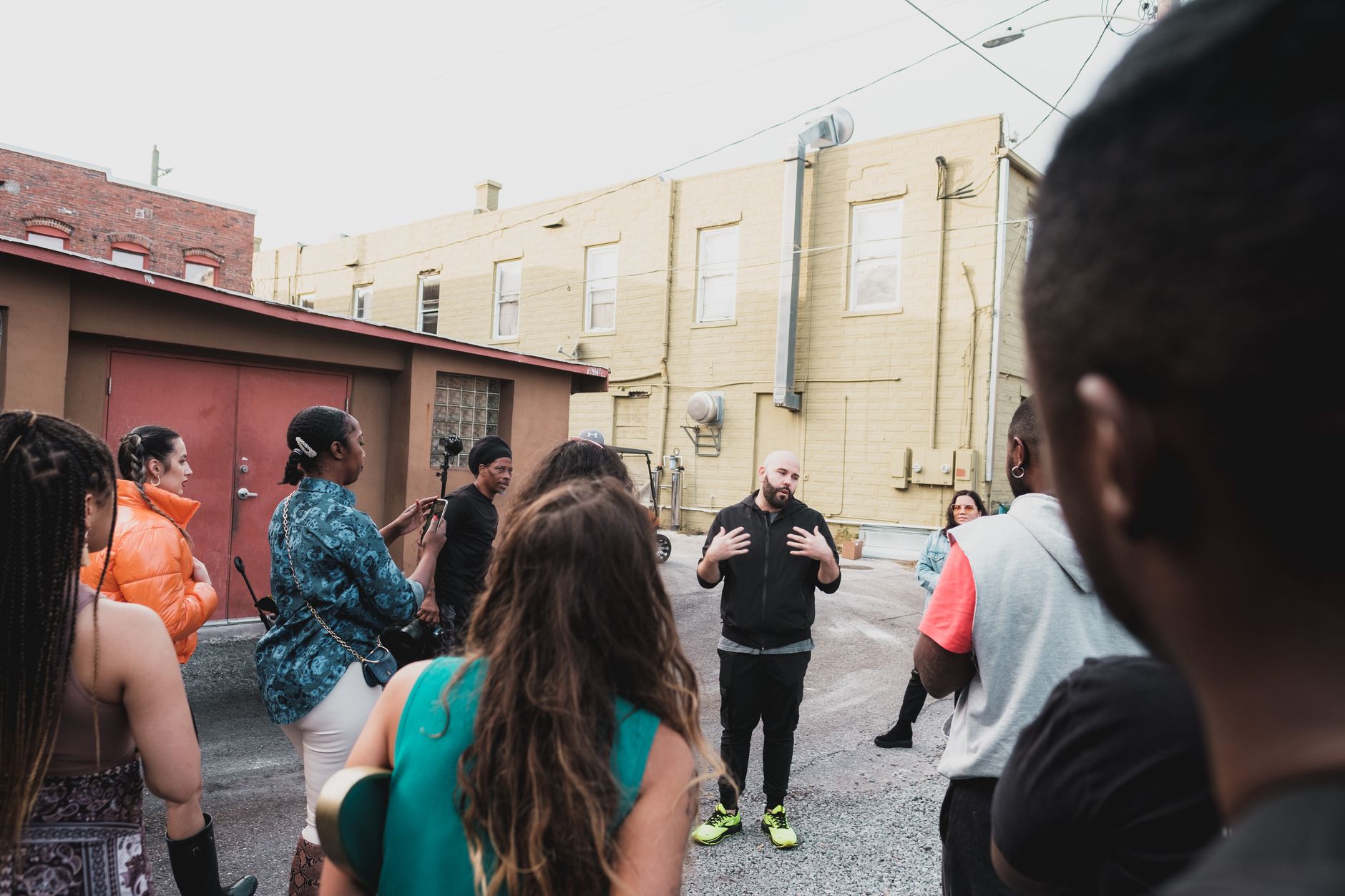
A community organizer helps people who share a problem act on it together. Where a caseworker solves one family’s problem, an organizer works on the conditions that many families face, such as unsafe housing, missing services or a policy that shuts people out. The goal is change that lasts, led by the residents themselves.
Social work standards describe this work in concrete terms. BLS lists “identify people and communities in need of help” and “research, refer, and advocate for community resources” among social workers’ core duties. CSWE’s competencies for every accredited BSW add the community-level skills organizers use:
- Policy practice: identifying local, state and federal policies that affect “well-being, human rights and justice, service delivery, and access to social services,” and influencing how they’re written and carried out.
- Advocacy at every level: advancing human rights “at the individual, family, group, organizational, and community system levels.”
- Negotiation: using “culturally responsive methods to negotiate, mediate, and advocate with and on behalf of clients and constituencies.”
- Evaluation: measuring whether work with groups, organizations and communities is getting results.
A close cousin of the job shows what community-level work looks like day to day. BLS describes community health workers as people who “conduct outreach, such as through home visits,” “coordinate care among individuals, communities, and health and social service systems,” and “advocate for individuals and communities regarding housing, food security, and other needs.” If you’re drawn to community work, roles like these are worth applying for alongside organizer postings.
How to Become a Community Organizer
There’s no license for community organizing and no single required degree. Employers hire for skills: listening, running a meeting, planning a campaign, writing a grant. That’s freeing, but you need a way to prove those skills. A BSW gives you one.
- Choose a CSWE-accredited BSW. Every accredited program teaches generalist practice “at the micro, mezzo, and macro levels,” which means work with communities and organizations, not just individuals.
- Take every community and policy course you can. Monmouth University, for example, includes Social Work Practices with Communities in its curriculum and lists community organizing and grant or policy writing among social work careers.
- Ask for a community-level field placement. Your 400-plus supervised hours can be spent in a community agency. The University of Texas at Austin, for one, describes a final-semester practicum “supervised by a professional social worker in a community agency that meets your goals and interests.”
- Get involved in your own community while you study. UT Austin’s BSW builds in service learning from the first semester to teach “the importance of civic engagement in the community you live.”
- Apply for organizer, outreach or advocacy roles. Your field supervisor is often your best first reference.
Why Social Work Fits Organizing
Organizing isn’t a side note in social work; it’s written into the profession’s standards. The NASW Code of Ethics says social workers “promote social justice and social change with and on behalf of clients” and that “fundamental to social work is attention to the environmental forces that create, contribute to, and address problems in living.”
The same code puts “particular attention to the needs and empowerment of people who are vulnerable, oppressed, and living in poverty” at the center of the profession’s mission. That’s the population most community organizing serves.
Compared with political science or public policy, the BSW adds supervised practice with real community members and a professional code. It also keeps two doors open that other majors close:
- A license, if you want one. You won’t need it to organize, but 42 of 52 jurisdictions issue a bachelor’s-level social work license to graduates of CSWE-accredited BSWs, which lets you move into licensed social worker jobs. Ten issue none: California, Colorado, Connecticut, Florida, Georgia, Illinois, New York, Rhode Island, Vermont and Washington. Check yours in the BSW license checker.
- A shorter MSW. Accredited master’s programs offer advanced standing to BSW graduates, and 316 BSW programs belong to schools with their own advanced standing MSW. That matters if you later want a macro or policy MSW to lead an organization.
Community Organizer Pay
BLS groups this work under community and social service specialists, all other: a national median of $56,730 across 107,730 jobs, with the middle half earning $45,920 to $69,910 and the top tenth $84,210 or more.
| Highest-paying states (500+ jobs) | Median | Jobs |
|---|---|---|
| Virginia | $69,810 | 2,190 |
| New York | $66,580 | 15,300 |
| Washington | $64,340 | 4,800 |
| New Jersey | $61,910 | 3,860 |
| Hawaii | $61,000 | 760 |
| California | $58,770 | 16,250 |
| Massachusetts | $57,360 | 1,480 |
| Oregon | $56,770 | 1,980 |
BLS Occupational Employment and Wage Statistics, May 2025, SOC 21-1099. BLS doesn't publish pay for this job title separately, so these figures cover the whole occupation.
BSW Programs That Prepare You
Lowest federal tuition and fees first: CSWE-accredited BSW programs.
Bachelor of Social Work (BSW) at Oglala Lakota College
Oglala Lakota College school profile · Kyle, SDFormatOn campusTuition$2,684per year, tuition and fees 2023-24 (in-state) · NCESAccreditationCSWE- Format–Tuition$4,231per year · resident rate · with feesAccreditationCSWE
Bachelor of Social Work (BSW) at Elizabeth City State University
Elizabeth City State University school profile · Elizabeth City, NCFormatOn campus, OnlineTuition$3,412per year, tuition and fees 2023-24 (in-state) · NCESAccreditationCSWEBachelor of Social Work (BSW) at University of North Carolina at Pembroke
University of North Carolina at Pembroke school profile · Pembroke, NCFormatOn campus400-hour practicumTuition$3,571per year, tuition and fees 2023-24 (in-state) · NCESAccreditationCSWEBachelor of Social Work (BSW) at Fayetteville State University
Fayetteville State University school profile · Fayetteville, NCFormatOn campusTuition$3,969per year, tuition and fees 2023-24 (in-state) · NCESAccreditationCSWE- Format–Tuition$4,010per year, tuition and fees 2023-24 (in-state) · NCESAccreditationCSWE
Your Field Placement Is Your Organizing Apprenticeship
Because organizing has no license, your field placement does the job a license does in other careers: it proves you can do the work. CSWE requires every accredited BSW to provide at least 400 hours of field education. Among the 155 programs that publish their hours, the median is 430.
Make those hours count:
- Ask for a macro placement directly. If you want community work, tell the field office early and ask which agencies have hosted community or policy placements.
- Pick a project you can finish. A resident survey, a public meeting or a small policy campaign gives you a result to describe in interviews.
- Keep numbers. How many residents you reached, how many attended, what changed. Program evaluation is one of the CSWE competencies, and it’s the evidence organizing employers and funders ask for.
- Learn grant writing. Monmouth lists grant or policy writing as a social work career in its own right, and it’s a skill every community group needs.
The trade-off is that community work moves slowly and results are shared, so you won’t always see one person’s life change in front of you the way you might in casework. A placement is the lowest-risk way to find out whether that suits you.
Where Organizers Work and What They Earn
Community-level work happens in many kinds of organizations. BLS lists “hospitals, public health departments, and community-based organizations” as the settings for community health workers, a close relative of organizing, who split time between office recordkeeping and field visits.
BLS doesn’t report community organizers as a separate job. Many fall into community and social service specialists, all other, a group of 107,730 jobs with a national median of $56,730 in May 2025. Virginia posts the highest state median at $69,810, followed by New York at $66,580. The pay section above shows the full spread.
BSW Programs to Start an Organizing Career
The BSW you need for organizing is the standard generalist degree, so you can pick a program on cost, location and the field placements it offers. 605 CSWE-accredited BSW programs at 539 schools qualify, with federal tuition and fees from $2,684 to $65,030 a year and a median of $12,896. Public schools have a median of $9,712; private schools $35,600.
The table below lists some of the lowest-cost options, with how you get into the major and whether the school runs its own advanced standing MSW, the usual next step for macro practice.
| Program | State | Getting into the major | Federal tuition and fees, in-state (2023-24) | Same-school MSW with advanced standing |
|---|---|---|---|---|
| Oglala Lakota College BSW | SD | Social work sequence begins with SOWK 203, offered in spring | $2,684 | |
| Dalton State College BSW | GA | Cohort admission each spring with a 2.5 GPA, volunteer hours and an interview | $3,283 | |
| Elizabeth City State University BSW | NC | Formal admission in the sophomore year after six 200-level social work courses | $3,412 | |
| UNC Pembroke BSW | NC | Junior-year application with a 2.5 GPA and 40 volunteer hours | $3,571 | 12 months full time or 24 months part time |
| Fayetteville State University BSW | NC | Formal application after 63 semester hours | $3,969 | 35 credit hours, one year full time |
| Western Carolina University BSW | NC | Apply after 35 credit hours with a 2.5 GPA | $4,532 | 33 graduate credit hours, 1 year full time |
| Florida Atlantic University BSW | FL | University admission; transfers over 60 credits need a 2.0 GPA | $4,879 | 2, 3, 4 or 5 semesters |
Blank cells mean the school’s program page doesn’t list a same-school advanced standing MSW.
North Carolina stands out: four of these seven low-cost programs are there, and three of them pair with an advanced standing MSW on the same campus. See the North Carolina BSW programs page. Compare others with the BSW cost comparison tool or the program matcher.
How to Choose a Program and Stand Out as an Organizer
Look for these:
- Community-level field placements. Ask where students have been placed. A campus with ties to neighborhood groups and advocacy organizations gives you more choices.
- Policy and community practice courses. Every accredited BSW covers policy practice; some offer more electives in it.
- Volunteer requirements that fit organizing. UNC Pembroke asks for 40 volunteer hours before admission and Dalton State builds volunteer hours into SOWK 2103. Make those hours count in community settings.
- An MSW route if you want macro leadership. 316 programs belong to schools with their own advanced standing MSW. Use the BSW to MSW route finder.
- Transfer options if you’re starting at a community college. 191 programs describe one; try the transfer finder.
To stand out, keep a simple record of every campaign you work on: how many people you contacted, how many came, what changed. That’s the evidence organizing employers ask for.
Where Community Organizing Leads
Organizing experience points toward leadership. A social and community service manager runs programs and staff, a natural step if you want to manage. A housing advocate focuses on housing, an issue many community campaigns center on. If you want to lead larger organizations or work in policy, an MSW with a macro focus is the usual credential, and a CSWE-accredited BSW qualifies you for advanced standing. Read how a BSW shortens the MSW.
Frequently Asked Questions
Do You Need a Degree to Be a Community Organizer?
Not always. Organizing has no license, so employers weigh what you can show you've done. A degree makes you more competitive for staff roles at agencies and nonprofits, and a BSW is the one that teaches community practice, policy advocacy and program evaluation with supervised field hours.
Is Community Organizing Part of Social Work?
Yes. CSWE's standards define generalist practice at the micro, mezzo and macro levels, and every accredited BSW covers work with organizations and communities. The NASW Code of Ethics says social workers promote social justice and social change with and on behalf of clients.
What Is Macro Social Work?
Macro practice is social work with communities, organizations and policy rather than one client at a time. A BSW introduces it as part of generalist practice; many MSW programs offer it as a specialization, and a CSWE-accredited BSW qualifies you for advanced standing in those programs.
What Does a Community Health Social Worker Do?
It's a related path focused on a community's health. BLS describes community health workers as coordinating care among individuals, communities and health and social service systems, conducting outreach such as home visits, and advocating for communities on housing and food security. A BSW with a health track, such as Florida Atlantic University's, fits that interest.
How Much Do Community Organizers Earn?
BLS doesn't report organizers separately. Many fall under community and social service specialists, all other, with a national median of $56,730 in May 2025. Virginia and New York post the highest state medians, $69,810 and $66,580.
Other Careers With a BSW
- How to become a child protective services workerEntry-level with a BSW
- How to become a case managerEntry-level with a BSW
- How to become a victim advocateEntry-level with a BSW
- How to become a housing advocateEntry-level with a BSW
- How to become a probation officerEntry-level with a BSW
- How to become a substance abuse counselorEntry-level with a BSW
- What you can do with a BSWAll 12 careers compared