Careers · Entry-Level With a BSW
How to Become a Substance Abuse Counselor
Can You Become a Substance Abuse Counselor With a Bachelor's Degree?
Yes. You can work as a substance abuse counselor with a bachelor's degree: the Bureau of Labor Statistics says these counselors typically need a bachelor's to enter the field, and a BSW with an addictions track, like Fort Hays State's with its 400 practicum hours, is a direct fit. Each state sets its own credential. Private practice is the exception: every state requires a master's and supervised clinical hours for it.
What a Substance Abuse Counselor Does
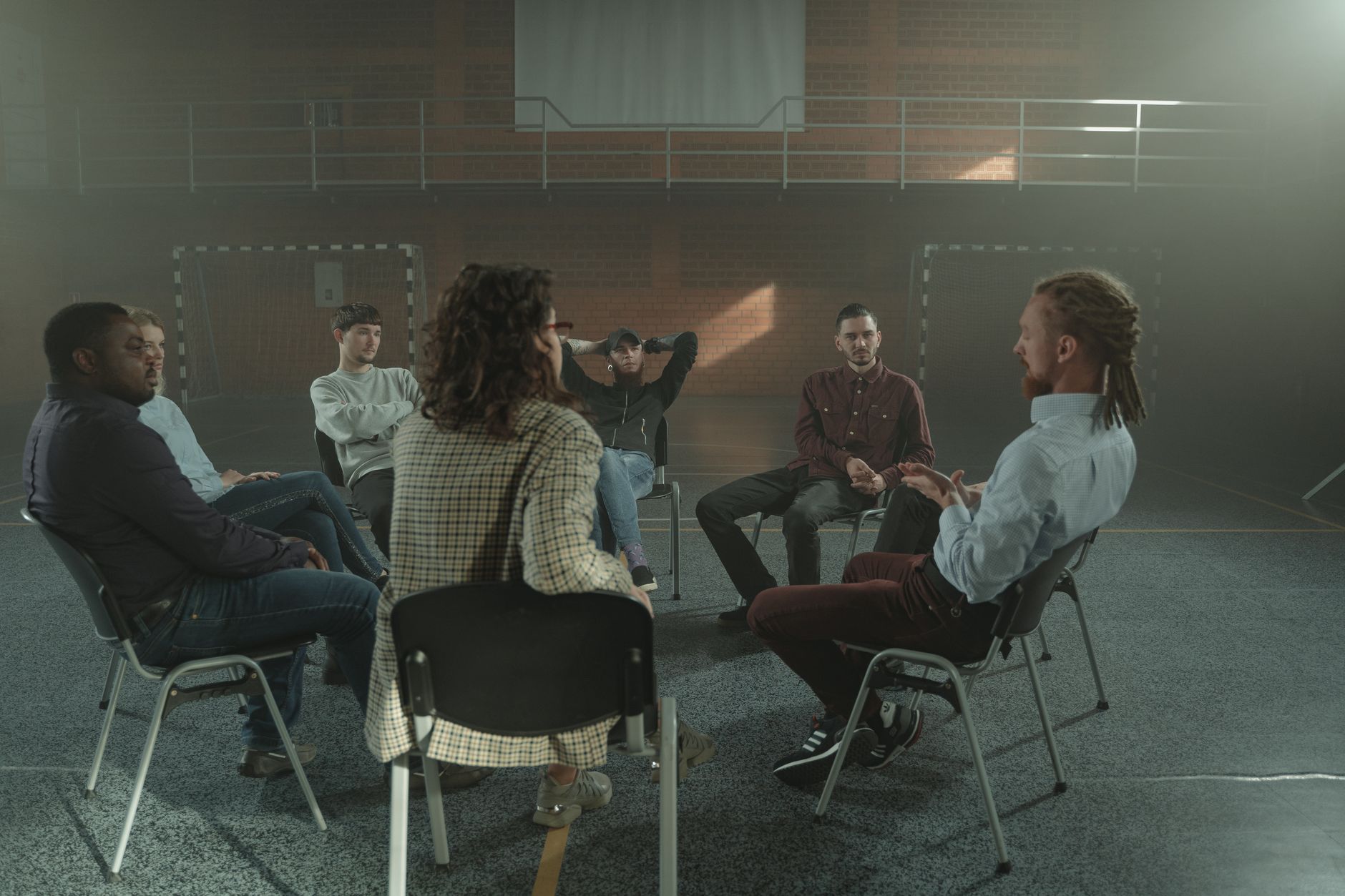
A substance abuse counselor helps people recover from addiction and rebuild the parts of life it damaged. According to the Bureau of Labor Statistics (BLS), these counselors “work with clients individually and in group sessions” and “teach clients how to cope with stress and life’s problems in ways that help them recover.”
The daily work, in BLS’s terms, includes:
- evaluating a client’s health, addiction and readiness for treatment;
- building and reviewing treatment goals with the client and family;
- helping clients spot the people, places and situations that threaten recovery;
- teaching family members how addiction works and how to support recovery;
- referring clients to job placement services and support groups;
- planning discharge so the client leaves treatment with a plan;
- running outreach so people recognize the signs of addiction earlier.
You will spend much of your day talking, listening and writing case notes. If you want more of the referral and coordination side, compare the case manager career.
Can You Be a Substance Abuse Counselor With a Bachelor’s Degree?
Yes. BLS says substance abuse and behavioral disorder counselors “typically need a bachelor’s degree to enter the occupation,” though state requirements “may vary from a high school diploma to a master’s degree.” That makes this one of the few counseling jobs where a bachelor’s is the usual starting point.
The line that matters is private practice. BLS says counselors in private practice must be licensed, and “all states require these counselors to have a master’s degree and complete a specified number of hours of supervised clinical experience.” Outside private practice, in treatment centers, hospitals and correctional programs, the rules vary: some states require no specific degree, and some require an exam.
A BSW is a strong choice of bachelor’s for this work because it adds:
- at least 400 hours of supervised field practicum (CSWE’s minimum);
- in many programs, an addictions track built around treatment settings;
- a bachelor’s social work license in 42 of 52 jurisdictions, which lets you hold social work titles as well as counseling ones;
- advanced standing toward an MSW if you later want private practice or clinical work.
Certification Rules Vary by State: The Washington Example
Every state writes its own rules for addiction counselors, and the credential often comes from a different agency than the social work board. Washington shows how a bachelor’s degree can shorten the path.
Washington’s Department of Health certifies Substance Use Disorder Professionals (SUDPs). To qualify, you need an associate degree in human services or a related field, or 90 quarter or 60 semester college credits, with at least 45 quarter or 30 semester credits in substance use disorder courses. Required topics include understanding addiction, pharmacology, ASAM placement criteria, clinical evaluation, treatment planning, individual and group counseling, and case management. Then you need supervised counseling experience, and the hours drop as your degree rises:
| Your degree | Supervised SUD counseling hours required in Washington |
|---|---|
| Associate degree | 2,500 hours |
| Bachelor’s degree | 2,000 hours |
| Master’s or doctoral degree | 1,500 hours |
You also pass a national exam: NAADAC level one or higher, or the IC&RC Alcohol Drug Counselor or Advanced Alcohol Drug Counselor exam.
Two takeaways. First, a bachelor’s saves you 500 supervised hours over an associate degree in Washington. Second, Washington issues no bachelor’s-level social work license, so there the SUDP credential is the one to aim for if you want addiction work. Check how much of a BSW’s coursework counts toward your state’s addiction credential before you pick electives. See Washington BSW programs.
Substance Abuse Social Worker vs Substance Abuse Counselor
People search both titles, and the jobs overlap. BLS describes mental health and substance abuse social workers as helping “clients with mental illnesses or addictions” and providing “information on services, such as support groups and 12-step programs.” Counselors center on treatment plans and counseling sessions.
| Substance abuse social worker | Substance abuse counselor | |
|---|---|---|
| Main credential | State social work license (bachelor’s level in 42 of 52 jurisdictions) | State addiction counselor credential, which varies by state |
| Focus | Assessment, referral, family and community resources | Individual and group counseling, treatment plans, relapse prevention |
| Usual entry degree | BSW for entry-level nonclinical roles | Bachelor’s degree, per BLS |
| Private practice | Clinical social work license, which requires an MSW | Master’s and supervised clinical hours in every state |
A BSW with an addictions track qualifies you for the first column in most states and prepares you for the second.
Substance Abuse Counselor Pay
BLS groups this work under substance abuse, behavioral disorder, and mental health counselors: a national median of $59,350 across 491,930 jobs, with the middle half earning $47,100 to $76,530 and the top tenth $97,590 or more.
| Highest-paying states (500+ jobs) | Median | Jobs |
|---|---|---|
| Alaska | $80,770 | 1,290 |
| Oregon | $74,590 | 8,160 |
| New Mexico | $74,100 | 2,420 |
| Washington | $68,910 | 14,250 |
| North Dakota | $68,630 | 1,290 |
| Arizona | $65,300 | 9,990 |
| Rhode Island | $65,120 | 2,170 |
| Utah | $63,890 | 6,320 |
BLS Occupational Employment and Wage Statistics, May 2025, SOC 21-1018. BLS doesn't publish pay for this job title separately, so these figures cover the whole occupation.
BSW Programs With a Substance Abuse Focus
Lowest federal tuition and fees first: CSWE BSWs whose pages name a matching track.
Bachelor of Social Work (BSW) at Elizabeth City State University
Elizabeth City State University school profile · Elizabeth City, NCFormatOn campus, OnlineTuition$3,412per year, tuition and fees 2023-24 (in-state) · NCESAccreditationCSWEBachelor of Social Work (BSW) at Florida Atlantic University
Florida Atlantic University school profile · Boca Raton, FLFormatOn campusTuition$203per credit · resident rate · with feesAccreditationCSWEBachelor of Social Work at Fort Hays State University
Fort Hays State University school profile · Hays, KSFormatOn campus, Online400-hour practicumTuition$216per credit · resident rateAccreditationCSWEBachelor of Social Work (BSW) at UCF
UCF school profile · Orlando, FLFormatOn campusTuition$6,368per year, tuition and fees 2023-24 (in-state) · NCESAccreditationCSWEBachelor of Science or Bachelor of Arts in Social Work at Weber State University
Weber State University school profile · Ogden, UTFormatOn campusTuition$6,081per year · resident rateAccreditationCSWEBachelor of Science in Social Work (BSSW) at CUNY Medgar Evers College
CUNY Medgar Evers College school profile · Brooklyn, NYFormat–Tuition$3,465per term · resident rateAccreditationCSWE
BSW Programs With an Addictions Track, Compared
This set has 26 programs at 24 schools in 17 states that list an addictions track. 25 are CSWE-accredited and 1 is in candidacy, which is not the same as accredited, so confirm status before you apply. Ten have an online option, and 11 publish transfer pathways.
| Program | Format | Federal tuition and fees, 2023-24 (in-state) | Field practicum |
|---|---|---|---|
| Elizabeth City State University BSW (NC) | Campus and online | $3,412 | Field education placement |
| Florida Atlantic University BSW (FL) | Campus | $4,879 | |
| Fort Hays State University BSW (KS) | Campus and online | $5,633 | 400 hours |
| UCF BSW (FL) | Campus | $6,368 | Agency internship arranged by the school |
| Weber State University BSW (UT) | Campus | $6,391 | |
| CUNY Medgar Evers College BSSW (NY) | $7,352 | Final-year practicum | |
| CUNY Lehman College BASW (NY) | Hybrid | $7,410 | 15 hours a week in the second year of the major |
| San Jose State University BASW (CA) | Campus | $7,992 | |
| Indiana Wesleyan University online BSW (IN) | Online | $8,216 | 400 supervised hours |
| San Diego State University BASW (CA) | Campus | $8,290 |
Blank cells mean the program lists no figure for that item in the records behind this page.
What an Addictions-Track BSW Costs
Federal tuition and fees for a full-time year (NCES, 2023-24) across the 24 schools run from $3,412 at Elizabeth City State University to $41,414, with a median of $9,322. 18 of the 24 schools are public, and their median is $8,290, against $33,450 at private schools.
Program rates fill in the picture:
- Florida Atlantic University: $203.29 per credit hour for Florida residents in 2026-27.
- Fort Hays State: $215.84 per credit hour on campus at the resident and regional rate, or $275.65 for online courses.
- Weber State: $6,081 for a full-time 2026-27 year in-state, with student fees listed separately.
- Indiana Wesleyan (online): $455 per credit hour, in six-week courses taken one at a time.
Run your own comparison in the BSW cost comparison tool, or see the affordable online BSW programs.
Getting Treatment Experience in Your Field Practicum
Your practicum is where you get supervised hours in a real treatment setting, and in states that count supervised experience toward a counselor credential, ask whether those hours can apply. CSWE requires at least 400 field hours in a BSW.
- Fort Hays State: 400 hours across Field Practicum I and II, and its BSW is offered on campus and online.
- Indiana Wesleyan University: 400 supervised hours, arranged near where you live.
- CUNY Lehman College: 15 hours of practicum each week in a social services agency or school during the second year of the major.
- Elizabeth City State University: a field education placement, with the BSW offered on campus and online.
Ask each program which detox units, outpatient clinics, recovery houses and drug courts take its students.
Where Substance Abuse Counselors Work
BLS lists “inpatient and outpatient treatment centers, correctional facilities, and hospitals” as common settings. Most counselors work full time, and part-time work is common. In inpatient or residential facilities, expect evenings, nights or weekends.
Be honest with yourself about the strain. BLS calls the work “often stressful” and notes that many counselors carry large workloads. Good supervision in your practicum is the best preview of whether the pace suits you. If you are drawn to the court side of recovery work, compare the probation officer career.
When an MSW Makes Sense
You can build a full career at the bachelor’s level, but you need a master’s for private practice in every state. For BSW graduates, an MSW with advanced standing can be the shortest master’s route. Examples from this set:
- Fort Hays State: a clinical MSW of 36 credit hours, with the advanced year beginning in summer.
- Weber State: 36 credits.
- CUNY Lehman College: 34 credits in 1 year full time.
- San Diego State: 38 units in 1 year, beginning with summer bridge courses.
CSWE grants advanced standing only to graduates of accredited BSW programs. If you want therapy work without the social work license, compare the mental health counselor route, which runs through a counseling master’s instead. Use the BSW to MSW route finder to see every same-school option.
How to Choose Your Program
- Addictions track listed? All 26 programs here have one; ask what courses it adds.
- Accreditation: 25 of 26 are CSWE-accredited; the candidacy program isn’t accredited yet.
- State credential fit: compare the program’s addiction courses with your state’s required topics, as in Washington’s list.
- Online or campus: 10 programs offer online study; the practicum is always in person.
- MSW route: 15 programs have a same-school MSW you can enter with advanced standing.
Substance abuse, behavioral disorder and mental health counselors earn a median $59,350 (BLS, May 2025). Browse all BSW careers or the full BSW program directory.
Frequently Asked Questions
Do You Need a License to Be a Substance Abuse Counselor?
Outside private practice, it depends on the state. BLS says some states don't require a specific degree but do require an exam. In private practice, every state requires a license, a master's degree and a set number of supervised clinical hours.
How Long Does It Take With a BSW?
The BSW usually takes four years, and you can start entry-level counseling work after it. A state credential can add supervised hours: Washington's substance use disorder professional credential asks bachelor's holders for 2,000 hours of supervised counseling experience.
Is a Substance Abuse Social Worker the Same as a Substance Abuse Counselor?
They overlap but are separate occupations. BLS describes mental health and substance abuse social workers as helping clients with mental illnesses or addictions and connecting them to support groups and 12-step programs; counselors focus on treatment plans and counseling sessions. A BSW prepares you for both.
Can I Earn the BSW Online?
Yes. 10 of the 26 addictions-track programs on this page have an online option, including Indiana Wesleyan University's online BSW at $455 per credit hour and Fort Hays State's online courses at $275.65 per credit hour. Field practicum hours are done in person at an agency.
Which Program Is the Most Affordable?
Elizabeth City State University in North Carolina has the lowest federal tuition and fees in this set: $3,412 for a full-time in-state year (NCES, 2023-24). It offers campus and online formats and an addictions track.
What Do Substance Abuse Counselors Earn?
BLS reports a median of $59,350 for substance abuse, behavioral disorder and mental health counselors, with 491,930 employed (May 2025). Alaska has the highest state median at $80,770.
Other Careers With a BSW
- How to become a child protective services workerEntry-level with a BSW
- How to become a case managerEntry-level with a BSW
- How to become a victim advocateEntry-level with a BSW
- How to become a community organizerEntry-level with a BSW
- How to become a housing advocateEntry-level with a BSW
- How to become a probation officerEntry-level with a BSW
- What you can do with a BSWAll 12 careers compared
Sources
- BLS Occupational Outlook Handbook: Substance Abuse, Behavioral Disorder, and Mental Health Counselors
- BLS Occupational Outlook Handbook: Social Workers
- Washington State Department of Health: Substance Use Disorder Professional certification requirements
- CSWE: Accreditation FAQs
- BLS Occupational Employment and Wage Statistics, May 2025
- CSWE, directory of accredited programs